Quilt Gallery

Thursday, June 9, 2016

A Flower Filled Spring

I've said before that spring is a wonderful time to be in central Texas. This year was no exception. In fact, it was the best wildflower year I think I have ever seen. Thanks to substantial and well-timed rains from winter through spring the flowers got just the right mix of water, sun and warmth for spectacular shows.

Texas Mountain Laurels, a small evergreen tree, bloomed in February. This one attracted dozens of Pipevine swallowtail butterflies.


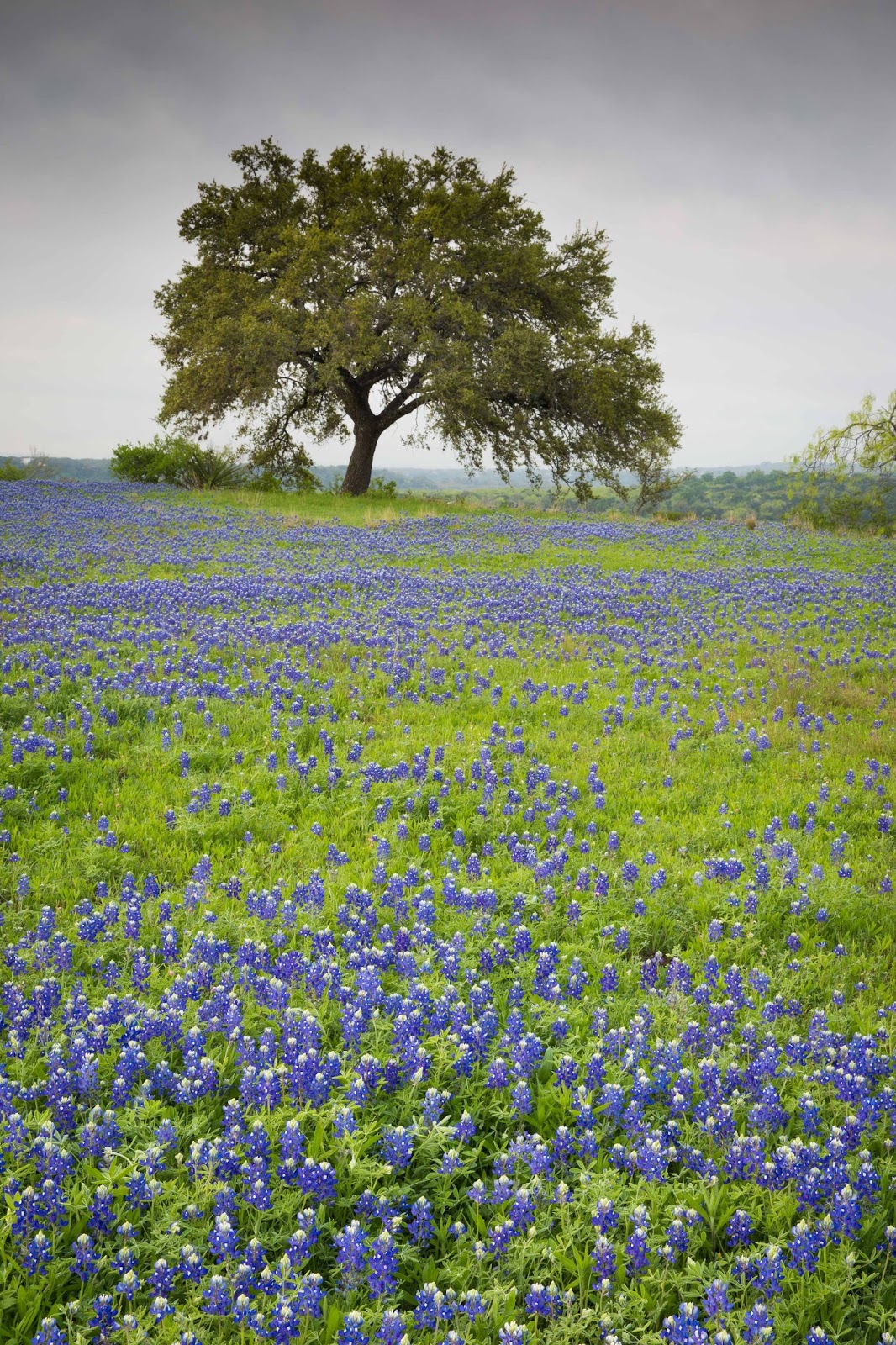
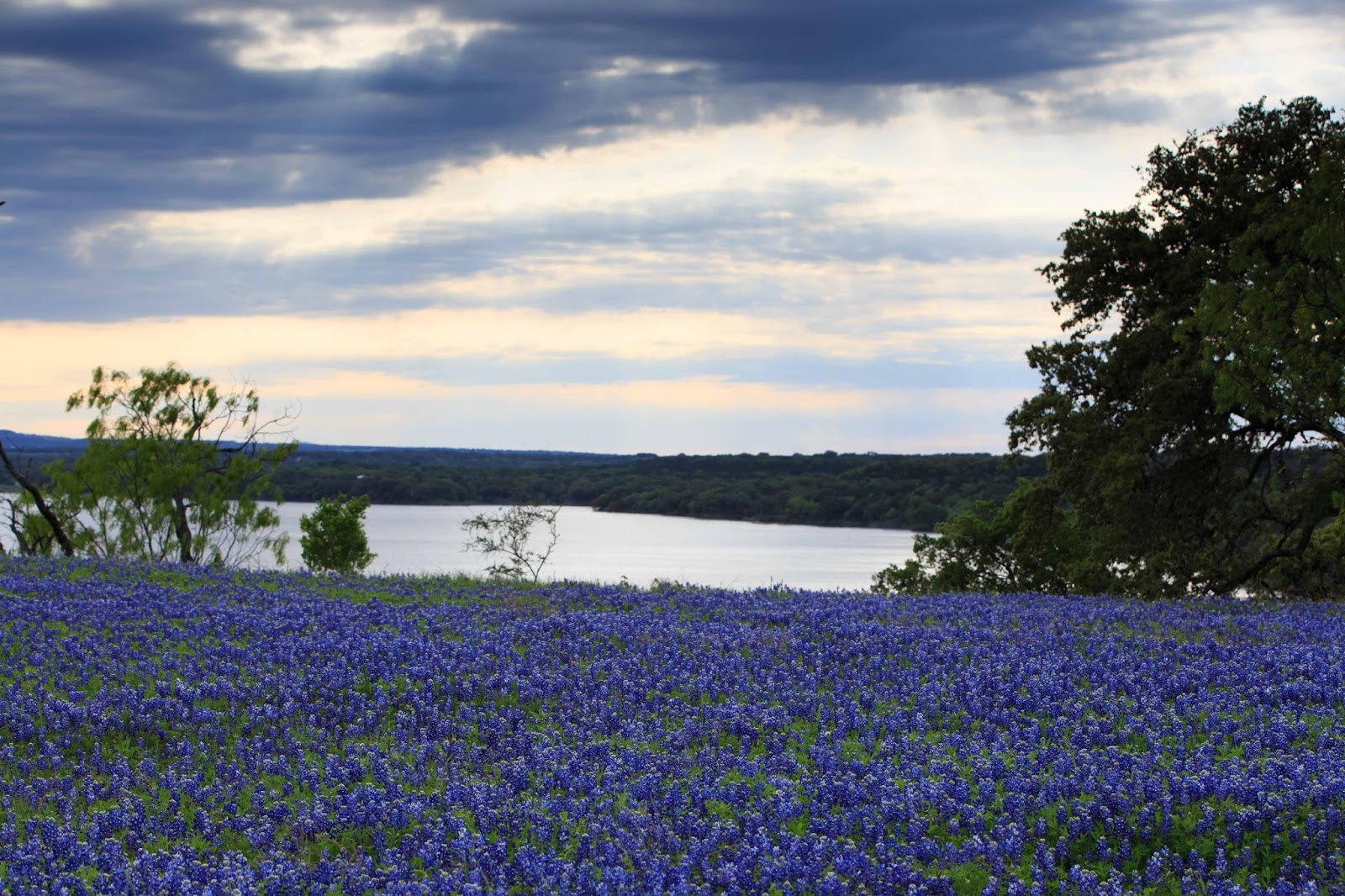
Bluebonnets, or Lupinus texensis, the state flower of Texas provided the first no-holds barred show of meadow flowers.


I love how they glow in the late afternoon light.


These cactus were, for once, more flower than spine. I still wouldn't advise that you try to pick them.


Just as the bluebonnets were fading, these little yellow flowers, brown bitterweed, opened up.


And then came Indian blankets, acres and acres of orangey red.


Even the deer seem amazed.


Up close you can see how the petals vary from red with yellow tips to entirely red.


The other nice thing about being at home for a while this spring was that I made so much progress on my various projects. I finished knitting the Calza shawl I was working on during March's cruise. (The pattern is available through Webs here.) Manos del Uruguay Serena hand-dyed yarn (60% baby alpaca, 40% cotton) is a delight to work with and results in subtle color variations. The finished shawl is light, soft and drapes beautifully.


The simple short-row pattern is worked in garter-stitch with a ribbed cable on the long end so both sides look exactly the same. Ta da! Completely reversible! I have gotten lots of use from it already, finding it great for airplane rides (remember the days when they offered blankets for free?) and over-air-conditioned restaurants.


On the quilting front, I finished piecing and quilting my Cookie Tree quilt. It awaits a binding.


I also finished piecing and quilting this broken star quilt for my younger daughter. It too still needs a binding.


I quilted the star's diamonds using an orange peel design and the background in a radiating pattern of alternating wavy and squiggly lines. I added up my quilting time and was amazed that it came to over eight hours!


I made a set of placemats out of some blocks leftover from another quilt. They were a fun way to practice freehand quilting on my long arm machine before I attempted the star quilt above.


I finished enough sixteen-patch blocks for a quilt and started putting them all together.


And finally, I have kept up with the "Westering Women" block of the month. Month four, Lone Elm, has so many pieces that it is naturally a very busy looking block. I think my use of only three fabrics helps to alleviate that and makes the overall tree design stronger.


My next post or two will be about China so I hope you'll visit again soon!

Monday, May 9, 2016

Does Traversing the Panama Canal from the Atlantic to the Pacific Count as "Westering?"

I ask this question because when I made the traverse in March I discovered that the Pacific end of the canal is actually east of the Atlantic end.  Initially that seemed very strange to me since the Canal was built as a faster route from the east coast to the west coast and here we were farther east than when we started. Of course, it isn't really strange at all. The fastest route between two places is often more a function of elevation change than of distance. By going around the Rocky Mountains, but not all the way around South America, the Panama Canal made the trip between the east and west coasts considerably faster and easier.

Entering the Gatun Locks

Anyway, traversing the Panama Canal is a fascinating way to spend a day. We went through the the Gatun Locks on our very large cruise ship, the Island Princess. Like many ships, it was designed specifically to fit through the canal, with mere inches between the ship and the walls of the locks.


A large container ship was in the lane next to us.


This view of the Culebra Cut at the continental divide gives you an idea of just how much material had to be removed to make the channel.

The Culebra Cut and the Centennial Bridge

The canal first opened over one hundred years ago and the original locks and gates are still in use today, though larger ones currently under construction are due to open within a few months.

Wall of the Miraflores Locks

We traversed the Pedro Miguel and Miraflores Locks on a very small boat, which gave quite a different perspective than the deck of a big cruise ship. We were practically at water level, sharing the locks with the container ship Diamantis P.


The question of "westering" is relevant to me at the moment because I am participating in Barbara Brackman's "Westering Women" block of the month project. I have now completed three blocks and am nearly finished with the fourth. I have been tempted to add the sashing and sew the blocks together, but am holding off to see how the other blocks develop. Rather than choose all my fabrics at the outset, I just gathered together all the reproduction fabrics from my stash and decide on specific fabrics block by block. Since I don't know now what colors I will end up choosing, it seems like a good idea to wait until the blocks are completed before choosing the sashing.

Blocks one through three, all hand pieced

I was thinking that this project would make a big dent in my stash, but I'm a third of the way through and there is no noticeable difference. Sigh.


Wednesday, April 20, 2016

Cartagena, Colombia

During last month's cruise I had time for a quick tour through Cartagena's old city, now a UNESCO World Heritage Site.

City wall with San Pedro Claver Church dome in the background 

I could have spent days exploring the narrow streets lined with brightly painted Spanish colonial buildings,


My favorites had windows and balconies spilling over with bouganinvillea.


Street life in Cartagena's old city is varied and vibrant. We watched children play on the old wall,


visitors pose for photos in front of the Church of Saint Peter (San Pedro) Claver,


dancers perform in the Plaza de Bolivar,


and an artist paint landscapes on glass.


The large number of street vendors shows just how popular a tourist destination the old city is. I found the artistry of the displays striking. This one looks very much like a scrappy quilt.


Bright yellow walls with crisp white trim made a particularly appealing backdrop.


Although I didn't make a single stitch on the quilt pieces I brought along, these bright walls gave me the idea to try yellow as a background color. I had previously settled on using tan and a rich brown to set the squares.


Cartagena's yellow walls made me wonder if a brighter color would be more fun.


I still have five more of the sixteen patch squares to make before I put it all together so I can think about the choice of setting a little bit longer.

Monday, April 4, 2016

Turquoise Waters of Aruba

I am recently back from a terrific ten days of cruising between Fort Lauderdale and Panama with my family. Our first stop was Aruba, where we had a half day of snorkeling in gorgeous turquoise waters. We sailed on the pretty little Jolly Pirate II to reach our snorkeling locales, enjoying all the varying hues of sea and sky along the way.

Jolly Pirate II

When we were snorkeling we discovered if we let our arms hang down the fish would school around and tickle our hands.


On returning to the pier I noticed these brightly colored fishing boats looking especially vibrant against pale turquoise waters. Wouldn't it be fun to use turquoise sashing around quilt blocks made from bold, saturated colors?


Anticipating lots of down time on the sea days - it took two days to reach Aruba from Fort Lauderdale - I brought three needle work projects along with me on the trip. Somehow those days just flew by, filled as they were with workouts, leisurely meals, blissful naps, and treasured family time, and I didn't make nearly as much progress as I thought I would.

Here is the still not quite finished knitting project I brought along: the Calza shawl designed by Lisa R. Myers using Manos Del Uruguay's Serena yarn. The 60% baby alpaca and 40% pima cotton yarn is wonderful to work with and I'm hoping will be comfortable against bare skin.


Come back soon to see lovely Spanish colonial architecture and more brilliant colors from our next port, Cartagena, Colombia.

Wednesday, March 2, 2016

Westering Women

Followers of quilting blogs will likely find the title of this post familiar. That's because it is the name of Barbara Brackman's 2016 block of the month series which celebrates America's overland migrations of the nineteenth century. On the last Wednesday of each month Barbara is posting, for free, a new block pattern, chosen as a reminder of locations along the trail between Missouri and the Pacific. Along with block instructions Barbara is posting historical background including diary entries, maps and illustrations, along with her own insightful commentary.

In spite of all the projects I already have going on, I jumped on the virtual covered wagon for this fascinating journey. It will be a good way to use many of the reproduction fabrics I have in my stash and fun to see what others do.

I completed my first block - all by hand - within four days of the pattern being posted. Let's see if I can keep that up throughout the year.

Block 1: Independence Square by Becky Brown

Reading about these pioneering women makes me appreciate my own trips to the west more than ever and realize how lucky that I am to be able to hop on a plane and arrive in Jackson Hole in only a few hours. My view of the west must be very different from those on the trail in the 1800s. For me, mountains are the destination, not a barrier to my destination; lots of snow means great skiing, not impassable trails. I especially enjoyed our trip to Jackson Hole this past December when days were filled with skiing and evenings were spent enjoying leisurely dinners with family and friends.

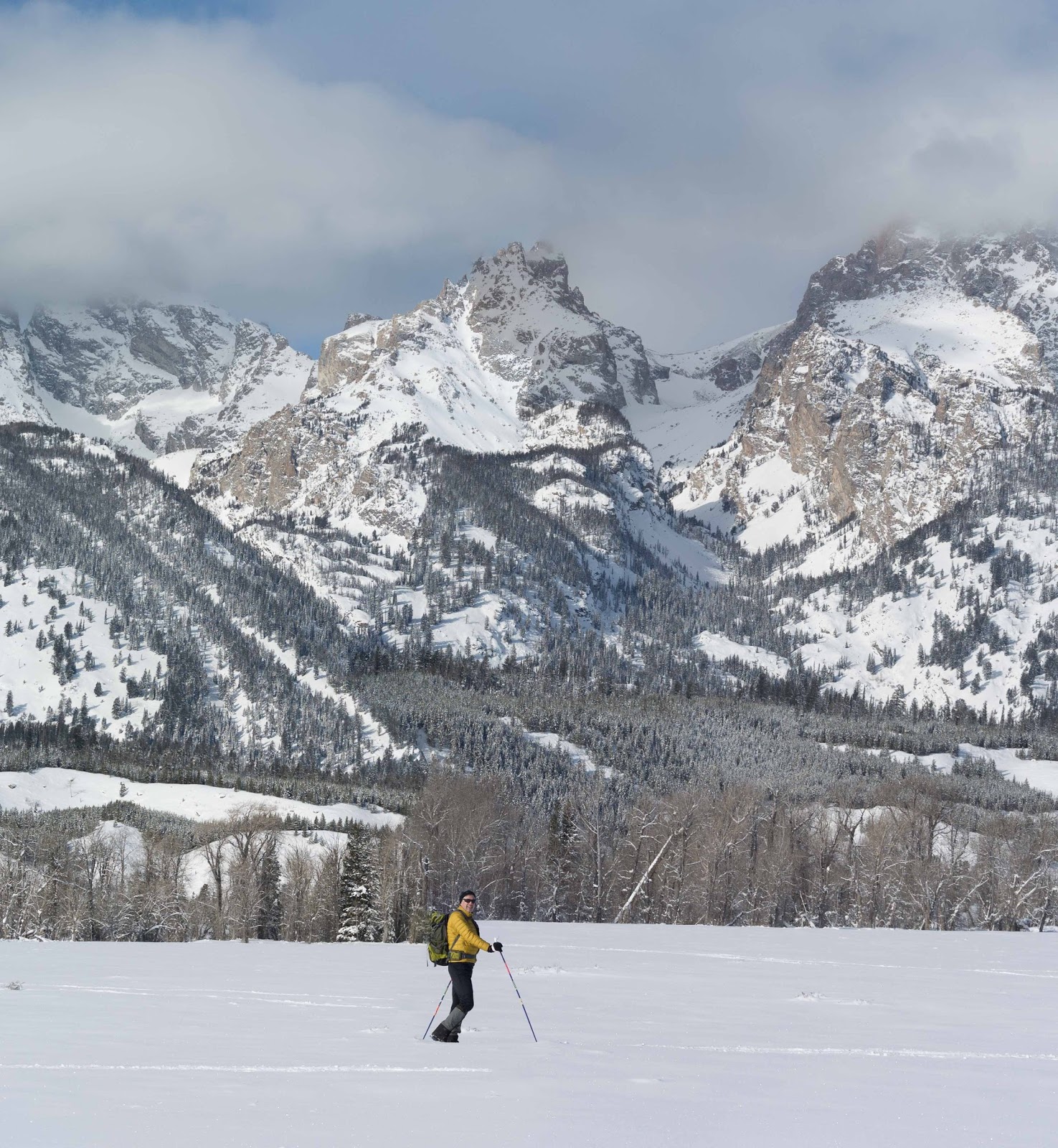
We had a particularly memorable day of cross country skiing in Grand Teton National Park. On a very cold but brilliantly clear morning we headed north from the Taggert Lake parking area on the road to Jenny Lake, which is groomed for skiing with two tracks for classic skiers and one track for skate skiers.

The Park Road, groomed for skiing

Although the Grand Teton was hidden by high clouds, the lower peaks were bright with fresh snow.

Steve in front of the South Teton

As we skied clouds began to gather, but arriving at Jenny Lake was like skiing into a snow globe. What a treat to enjoy Jenny Lake without the crowds of summer!

Jenny Lake outflow

We had a quick lunch on the porch of the Jenny Lake Store (which was, of course, closed for the season).


And then turned back towards our car at Taggert Lake. Although it was only about ten miles roundtrip I found it surprisingly tiring, most likely due to my poor skiing technique, but also perhaps due to the cold temperatures and the high altitude.

Heading home from Jenny Lake

I am back east now but as I work on my next Westering Women block I will be reminded of the myriad struggles, adventures and joys that generations of Americans have experienced by traveling west.

Wednesday, February 24, 2016

Polar Knitting

Regular readers of this blog will recall that I made a trip to Svalbard, Norway, last summer. In search of wildlife and dramatic scenery, we spent much of our time cruising the polar waters in open zodiacs. I stayed warm in my very own genuine reproduction Douglas Mawson balaclava. Mawson was an Australian geologist who explored Antarctica in the early decades of last century, including leading the first expedition to reach the magnetic south pole. He knew what he was about when it came to cold weather equipment.


One of my shipmates, Doug Cheeseman admired my Mawson balaclava so much that I promised to make one for him. As the owner of Cheeseman's Ecology Safaris and frequent leader of trips to Antarctica Doug was familiar with Mawson's history, and appreciated the usefulness of balaclavas in very cold environments.

Doug Cheeseman enjoying Arctic Beer

In the spirit of the original, I made Doug's balaclava almost entirely of yarn leftover from other projects.

Mawson's balaclava

For more information and a link to purchase the pattern take a look at Artlab Australia's website.

You may also remember that during my trip to Svalbard I was practicing two color knitting. I originally thought I would use the piece as a scarf, but once it was finished I decided it was too heavy and too bulky to be worn comfortably. Instead I stuffed it (using up lots of long narrow scrap pieces of quilt batting) and have put it on a bed as a bolster. It makes reading in bed more comfortable and more colorful.


If you are wondering about the quilt in this photo, it is the first one I ever made. I started it 1986 when I was laid up after foot surgery, then put it aside unfinished while life - school, marriage, new jobs - got in the way. Somehow after my second daughter was born in 1998 I pulled it out again and finished it.  I'm not entirely sure how I found the time to do it then as I was working full time and had two young children to care for. It's not particularly well made but I still really like it's vibrancy and that I can identify the source of every piece of fabric. Some came from clothes I made for myself, others from home decorating items, and still others were given to me by friends. It shows once again that quilts can warm your heart as well as your toes.