Quilt Gallery

Sunday, September 15, 2013

Relaxing on Galway Lake

I was lucky enough to be able to spend a weekend this summer with part of my family at their cabin on Galway Lake, near Saratoga, NY.  It was such a pleasure to while away the afternoons catching up on family doings, kayaking and swimming, reading and knitting.


I'm still on the bear kick I began when we went to Wyoming earlier in the summer.  Knit bears are highly portable, use up bits and pieces of my yarn stash and offer instant gratification.  Plus, they are really cute. This little guy stayed behind in Galway to skipper a model sailboat on the porch.


Wednesday, August 28, 2013

Vintage Jackson Hole


I have completed my vintage quilt top from the pieces I acquired years ago at a Jackson Hole garage sale.  

Quilt top ready for basting
The original pieces date from at least the 1930s and, based on the fabric designs and level of wear, I am guessing they were made largely from clothing scraps.  Within each larger block are smaller four patch designs, perhaps leftover from another project.  All of the designs and scraps were eventually foundation pieced onto flannel or other scrap backing.  Definitely a case of making do with what was available!  The older pieces were stitched by hand while some of the later pieces were stitched by machine.  I have completed it using both vintage fabrics and new reproduction fabrics, sewing both by hand and machine.  Old and new all jumbled together.  All of these quirks and the history hidden within give it tremendous character and charm.  

Jackson Hole is a lot like this quilt top:  a blend of old and new and richer in character because of it. From very early days it was recognized for its great scenic beauty and value as a destination for recreation, hence the proliferation of dude ranches. There are fewer operating dude ranches today but Jackson Hole remains a wonderful place to explore on horseback. We took a half-day ride from Moose Creek Ranch, just over the pass road to Idaho, so not actually in Jackson Hole, but a great choice nonetheless:  beautiful scenery and not a single other person.


Horses continue to be used for more than recreation. We saw this pack train carrying supplies up Cascade Canyon for trail maintenance.

Pack train in Cascade Canyon
For local flavor of the musical kind head to Dornan’s in Moose for the Hootenanny, or “The Hoot,” a weekly event in which locals and even some brave visitors share their music and songs with all who care to listen. There is some great talent in the valley so it is quite popular. Come early to secure your seat and order a meal.  It is held Monday evenings at 6:00, outdoors during the summer and indoors during the colder months.

At "The Hoot"
Downtown Jackson also is a mix of old and new.  It seems that many of the art galleries are in new buildings in the modern style, but you can still enjoy a meal in an old log cabin, such as Sweetwater’s or CafĂ© Genevieve.


Or a drink at the Million Dollar Cowboy Bar.


Tuesday, August 20, 2013

Lots of Bears and Grand Views

Prior to departing for Jackson Hole several weeks ago I heard reports of significant amounts of bear activity in Grand Teton National Park.  This, along with having seen a post by Lucy of Quilting With the Past in which she showed off her knit bear, gave me the idea to knit one of my own.  I rummaged around online for a pattern and in my stash for suitable yarn and knit in odd moments here and there.   And here he is.

"Grand"

To give you an idea of his size, note that the squares on his quilt are one half inch on a side. I have named him "Grand" for the magnificent peak which dominates so many views in Jackson Hole.  He was fun to make, though sewing up the thirteen tiny pieces was a little tricky, especially because the hand spun yarn I used is so fuzzy that it was hard to see what I was doing. Next time I'll choose a yarn with better stitch definition.

Knitting a bear was indeed an appropriate choice for this trip. Altogether we spotted six bears, more than we have ever seen in a single season; in fact, more than we used to see over many summers combined.

The most entertaining encounter was in Upper Paintbrush Canyon, just above Holly Lake, where we spotted a mother and her two cubs.  In no time the cubs scurried forty or fifty feet up a tree, found themselves some comfy branches, and went to sleep. The mother stayed at the base of tree foraging for food and posing for photos, or so it seemed. In my excitement I made rookie photographer errors so unfortunately she is not as clear as she should be.

Black Bear cubs

Black Bear (Note that not all Black Bears are black)

Grand Teton National Park is of course named after its tallest and most famous peak, which is usually called, with equal measures of affection and awe, "The Grand." From every direction it looms up to capture your attention.  Its character seems to change depending on the vantage point, the time of day, the season, and the weather.

Since our overnight back country trip took us to the upper part of North Cascade Canyon in the evening we were able to take sunset photos of The Grand across the smooth waters of Lake Solitude.  For anyone wanting to make a similar trip, keep in mind that the area around Solitude is closed to camping so you will need to secure a permit (at the information center in Moose or the ranger station at Jenny Lake) for the North Fork Camping Zone located below the lake.  Violations can result in a citation and fine of $120.  Yes, the rangers do check.

Mount Owen and The Grand Teton across Lake Solitude

One morning we got up before dawn to take sunrise photos at Schwabacher's Landing, a location which offers stunning reflections in calm waters and a straight on view of a line of jagged peaks such as a child might draw. It turned out to be a great morning for photos with a sky full small puffy clouds.  If you want to go to Schwabacher's Landing note that the road has been closed to vehicles due to sequestration-induced budget cuts and is now being treated as a hiking trail.  We parked on the shoulder of the highway and walked down the road in about twenty minutes.

Sunrise at Schwabacher's Landing

The clouds hung around all day and made a dramatic sunset.

Sunset over the high peaks

From high up across the valley the peaks seem bigger.

Near Jackson Peak

From the south The Grand seems bigger yet.

Hiking down Taylor Mountain

In South Leigh Canyon on the western side of the range the top of The Grand sticks up like a shark fin.

In South Leigh Canyon

And from the upper slopes of Mount Saint John it feels as though you can reach out and touch it.

Climbing Mount Saint John with The Grand and Mount Owen (the darker peak with snowfields) as backdrop

Anyone wanting to see these mountains from a perspective other than the highway turnouts or Jenny Lake would do well to pick up one or more of Rebecca Woods' excellent hiking guides.  They are available at the Valley Bookstore in town, at the visitors' centers in town and in Moose, and online at The Jackson Hole Bookstore.  She describes hikes of varying lengths suiting a variety of abilities and interests so you are sure to find something that will appeal to you and your group.

Sunday, July 21, 2013

Hiking in Antarctica

Our expedition to Antarctica, in celebration of the Geological Society of America's 125th anniversary, offered many opportunities to hike.  That was, after all, the only way to reach some of the key outcrops and parts of glaciers that were safe for walking.  While most of the wildlife action was near shore, each hike offered something that couldn't be experienced by staying close to shore.

We were fortunate to have an expert guide, Tim Carr, to lead us on these hikes.  Tim and his wife Pauline lived on and explored South Georgia Island for fourteen years so they know the island very, very well. One South Georgia hike, from Godthul to Sandebugten, took us inland across the Barff Peninsula and through Reindeer Valley.  The latter is aptly, if unimaginatively, named, as the reindeer seem to like it's tufty-grassed and mossy ground.

Reindeer Valley, South Georgia Island

On another hike we retraced the footsteps of Ernest Shackleton and two of his crew, Frank Worsley and Thomas Crean, following the final portion of their 1916 hike across South Georgia Island to the safety of the whaling station at Stromness. For those not familiar with Ernest Shackleton, I highly recommend the book "Endurance: Shackleton's Incredible Voyage" in which Alfred Lansing tells the riveting story of how the 1914 Imperial Trans-Antarctic Expedition went from high hopes to near disaster to one of history's greatest feats of seamanship and survival. Unlike Shackleton, we walked these final miles in the summer time with a good map, full bellies and the latest expedition attire. What for him was a matter of life and death was for us an afternoon stroll. Still, it was nice to come over the ridge and see the famous z-fold on the opposite cliff, which had alerted Shackleton one hundred years earlier that he had indeed found his way back to Stromness.

Stromness Bay, South Georgia Island

From South Georgia Island we headed to Elephant Island, thus following another part of Shackleton's journey, albeit in reverse. We were fortunate to have calm enough water to land at Cape Lookout on Elephant Island.  We were also fortunate to have clear skies, making the short, steep hike up the ridge around the bay worthwhile for the expansive views.

View from above Lookout Point, Elephant Island (photo courtesy of Steve)

Another sunny day and another short and steep hike at Cuverville Island, just off the west coast of the Antarctic Peninsula, brought more brilliant views, especially as a recent storm had left a fresh blanket of snow.

View from Cuverville Island

At Cuverville Island, the dark speck amid the icebergs is a zodiac (photo courtesy of Steve)

Deception Island, one of the South Shetland Islands to the northwest of the peninsula, is a collapsed volcanic caldera.  Ships can reach the relatively protected waters in its center by sailing through a narrow gap called "Neptune's Bellows."

Volcanically warmed sands at Deception Island (photo courtesy of Steve)

In spite of being in the inner protected part of the island our day at Deception Island was the windiest one we spent ashore.  I was glad on our morning hike, when it was still overcast and thus quite cold, to be wearing my thrummed woolen mittens. Thrums, by the way, are little extra bits of wool roving knit right into the fabric, giving an extra layer of wooly warmth. When I made these mittens several years ago it was definitely a case of "wishful knitting" since it is always too warm in Texas to wear them here.  Fortunately, I got my wish!

Each thrum makes a little "V" on the outside

Our afternoon hike to the Chinstrap Penguin colony at Baily Head brought sunshine but even stronger winds.  I seem to recall someone saying they were 40 or 50 knots.  Some people were actually knocked over by it and my daughter and I walked holding on to each other to keep from getting blown over.

Returning from Baily Head, Deception Island

In spite of the wind and cold we were determined to take advantage of our opportunity to say that we swam in Antarctic waters, so upon returning to the beach we stripped down to our bathing suits and ran into the water.  And just as quickly ran out.  The slightly warmer sand is not enough to make it into the spa it once was.  Another eruption is definitely in order.

Note the attire of photographer Scott Davis (photo courtesy of Steve)

We spent our final day ashore at Livingston Island, another of the South Shetland Islands, under sunny skies.  Expertly led once again by the extraordinary adventurer, Tim Carr, we climbed a steep slope of snow and scree and, upon reaching the ridge, were rewarded with a panoramic view of the western end of the island.

Climbing up, at Hurd Peninsula, Livingston Island

View from Hurd Peninsula, Livingston Island

View from Hurd Peninsula, Livingston Island

Climbing down, at Hurd Peninsula, Livingston Island

And here is my travel tip (unsolicited and unremunerated, by the way) for the day.  While this trip was sponsored by the GSA and the Jackson School of Geosciences at the University of Texas and led, geologically speaking, by Ian Dalziel from the University of Texas, the overall expedition leader was Ted Cheeseman of  Cheeseman's Ecology Safaris.  If you are thinking of making a trip to Antarctica, I highly recommend Cheeseman's.  They handled every aspect of the trip was with great professionalism and attention to detail.  They  provided expert pre-trip assistance with travel arrangements, insurance, packing lists, and more.  The entire staff, including photographers, wildlife biologists, naturalists, historians, scientists, an artist, and a medical doctor, were knowledgeable, patient, and just plain fun to be around.  Most importantly, Ted, with a deep knowledge of Antarctica and good working relationships with the ship's crew, was able to adjust plans to avoid bad weather and to take advantage of the best conditions.   The result was plenty of time ashore and a ship full of passengers eager for their next trip to the far south.

Ted Cheeseman at Livingston Island


Tuesday, July 16, 2013

A Capitol Independence Day

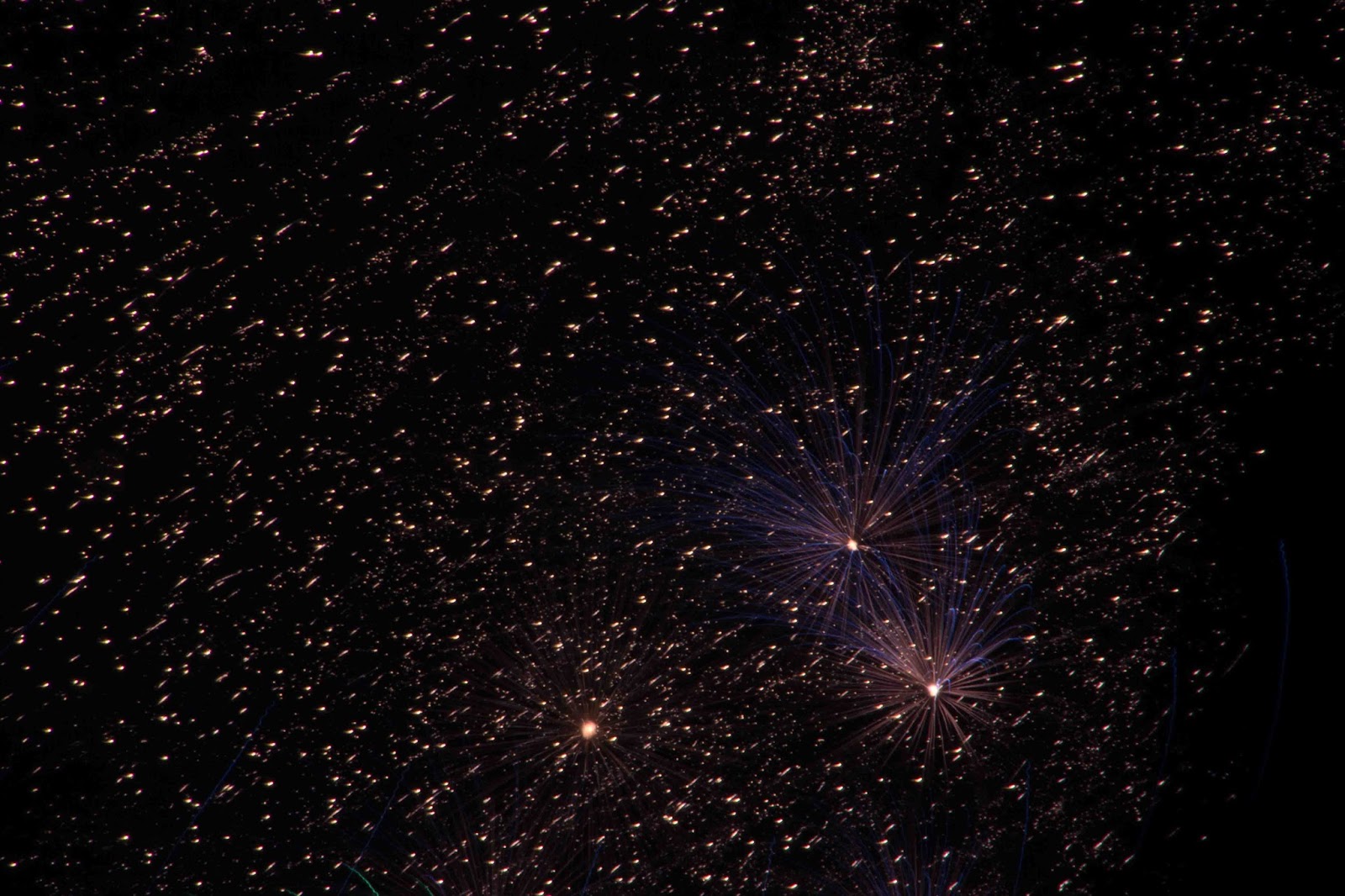
A Fourth of July trip to Washington, D. C., gave us a chance to enjoy some of our Capitol's most famous sights, starting with the annual fireworks display.  It was quite a scene, even before the fireworks began, with thousands of people walking to parks, parking lots, and hilltops to stake out good viewing locations.  The fireworks themselves were terrific.  I think my best photos were the ones in which I used the smallest aperture, as the longer exposures allowed me to capture longer trajectories.


The Smithsonian Institution, aptly referred to as "our nation's attic," is as fascinating as ever.  In the American History Museum I thought it was very cool to see the suit George Washington wore for special occasions and portraits.  Too bad that the people who made it, entirely by hand of course, including all those beautifully finished buttonholes, don't get any credit.

Detail of George Washington's suit

The National Museum of Natural History had a special exhibit "2012 Nature's Best Photography Awards."  If you like wildlife and landscape photography, you will enjoy these images.  I also liked the permanent mammal exhibit which shows how mammals adapted to environmental changes over the course of millions of years.  For sheer drama, though, it is hard to beat the 14-foot African elephant in the museum's rotunda.


Instead of showing my own needlework today, here are a few photos of the best yarn bombing display I have yet to see.  A group called the "Guerrilla Stitch Brigade" spent hundreds of hours crocheting and knitting an incredible array of critters and a garden's worth of plants and flowers to adorn the Rosslyn, Virginia, sculpture by Christopher Gardner entitled "Cupid's Garden."

Cupid's Garden, by Christopher Gardner


Monday, July 8, 2013

Art Deco in Tulsa

Accompanying Steve to Oklahoma two weeks ago gave me a day to wander around downtown Tulsa.  Funny that I had never seen much of that part of Tulsa before even though I spent many weeks in Tulsa at Amoco's training center back in the days when I was an exploration geophysicist.  I never thought much about Tulsa's history and I certainly didn't appreciate its significant Art Deco heritage.  In the 1920s money flowed along with oil in Tulsa and was poured into construction of extravagant buildings of the latest fashion.

Strolling down Boston Avenue, which retains many of its original buildings, is like stepping back in time.  When I visited in early morning the Atlas Life Building's wonderful neon sign stood out dramatically in the deep shade.  Standing by itself a few blocks south, the upper portion of the Boston Avenue Methodist Church's tower glowed in the sun.

Looking south along Boston Avenue

The lobbies are as interesting as the exteriors and, on the hundred degree day on which I visited, their air conditioning made them even more appealing.

In the Atlas Life Building lobby

The glass on this ceiling light is etched with a pattern that could easily be adapted for quilting.  Perhaps for my "Mysterious Antarctica" piece.

Ceiling light, Pythian Building

Ceiling detail, Philcade Building

Even though it was hot, I still went for a morning coffee.  The barista at Topeca Coffee made different designs in each latte. Delicious!


I didn't have a car, but if I did, this is where I would have wanted to park it.  So much more refined than a garage!


As the style of it's sign suggests, Decopolis's  merchandise, including pieces by local artists, harks back to earlier days.  I still like to write the old fashioned way - with paper and pencil - so I bought several of their notebooks.


The Boston Avenue Methodist Church must be the crown jewel of Tulsa's Art Deco buildings.  Its position several blocks southeast of central downtown makes it a prominent landmark.  Completed in 1929, it has been lovingly maintained for close to a century now.  Motifs representing aspects of spirituality are repeated throughout the building and its furnishings, from walls and windows to chairs, lamps, and even such prosaic elements as radiator covers.  The result is a wonderfully unified whole. One heavily used motif, a set of downward flowing lines representing the outpouring of God's love, appears in the exterior terra cotta and is repeated throughout, including on chair backs and stained glass windows.

Tower of the Boston Avenue Methodist Church

The lines cross in exactly the same way as cables in knitting.  Coincidentally my handwork project for this trip was a nearly completed sweater with cabled ribbing at the hem and cuffs and a cable along each side.  As you can see, it is now finished.


I found the most remarkable feature of the church to be the unrestrained use of lush rosy pinks in the interior decoration.

North Mosaic (added in 1993) depicting the burning bush, Torah scroll and the prophet's staff 

Wall opposite the screen (Yes, the photo is in focus)
Interior screen


As I was preparing to photograph the exterior of the church this old Air Force plane flew overhead and I really did have to wonder whether it was still 2013.


The facade of this Boston Avenue building includes a relief of a very similar aircraft.

Note the aircraft just to the right of the oil derek in the center

The treasures downtown and our lovely accommodations contributed to an unexpectedly pleasant trip. If you ever visit Tulsa, I can recommend the Ambassador Hotel, located just outside of downtown. Though built in the1920s it has been updated to modern standards.  I found the staff gracious and our room comfortable and quiet.